
Stock Options Trading Signals
Loheden AI Solutions ABFinance
4.317.00 Reviews
- Version
- 1.3.82
- Installs
- 10.00K
- Age Rating
- Everyone
Screenshots
Our Review of Stock Options Trading Signals
 Analysis by Appyee
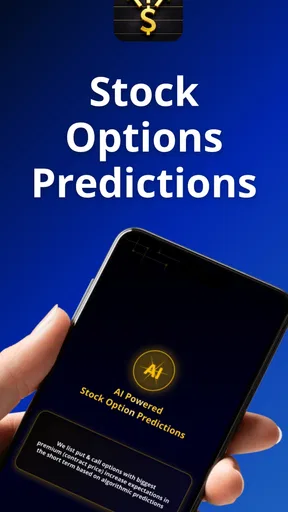
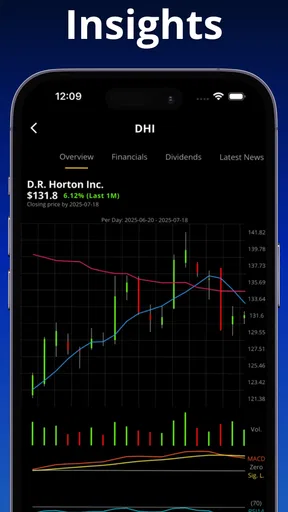
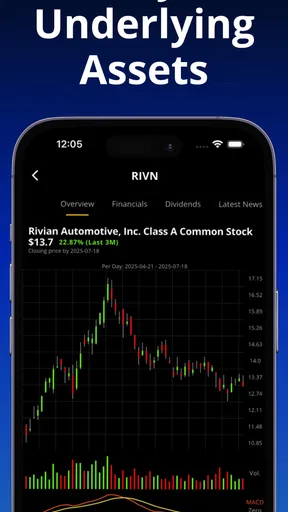
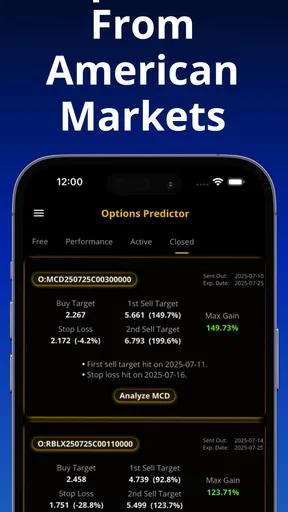
Stock Options Trading Signals is a finance app from Loheden AI Solutions AB that focuses on AI-assisted predictions and analysis for stock options in American markets. I approached it less like a replacement for a broker and more like a research companion: something to open when I want a structured view of possible options activity before making my own decision. That distinction matters, because a signal can organize thinking, but it cannot remove the risk built into options trading.
The app is free to install and is rated for Everyone, which makes it easy to try without committing money at the download stage. Its average rating is 4.3 from around 474 ratings, and it has passed 10K+ installs. Those figures suggest a modest but real user base rather than a mainstream investing platform. I also noticed that optional purchases range from $39.99 to $199.99 per item, so the important question is not simply whether the app is free, but whether its analysis is useful enough for your own workflow before you consider paying for anything.
AI signals are useful when they sharpen a decision, not when they make it for you
I use an AI signal as a prompt to investigate, not a verdict that settles the trade. In this section, I’ll look at how that distinction affects the app’s practical value, including the checks I’d make before acting and the situations where a prediction is better left as a research lead.
What the central capability actually offers
The defining idea here is the use of AI stock-options predictions and analysis tools for American markets. In practical terms, that means the app is aimed at highlighting possible opportunities or market situations that deserve attention. I find that more useful than treating it as a magic answer generator. Options involve direction, timing, volatility, and the possibility of losing the entire premium, so even an attractive-looking prediction needs context.
The strongest use of a signal is as a filter. Instead of opening a large watchlist and trying to inspect every company, I can use an analytical prompt to decide which names deserve deeper research. That saves mental energy, especially when the market is moving quickly. The signal becomes the beginning of a checklist: What is the underlying stock doing? Is the option liquid enough? Does the expiration give me enough time? Is the potential reward worth the amount at risk?
This is also where expectations should stay realistic. The app’s focus is analysis, not personal financial advice. It does not turn a beginner into an experienced options trader, and it should not be used as an automatic instruction to buy calls or puts. I would never treat a prediction as a guarantee, particularly around earnings, sudden news, or broad market shocks. The practical value is in narrowing attention and encouraging a repeatable review process.
How I would use a signal before placing any trade
My first step would be to treat the app as a screening layer rather than the final destination. After seeing a candidate, I would independently check the underlying share price, the option’s strike, expiration, bid-ask spread, open interest, and implied volatility through a broker or market-data source. These details can change the quality of a trade dramatically. A prediction can appear correct about the stock’s direction while the option still performs poorly because of time decay or an expensive premium.
A useful routine is to write down the reason for considering the trade before opening the order ticket. For example, I might note that the signal points toward a bullish setup, then record the price level that would invalidate my idea and the maximum amount I am willing to lose. This prevents the app from becoming an emotional shortcut. If the trade only looks appealing because the signal feels authoritative, I would skip it.
I would also compare the signal with the broader market rather than examining the ticker in isolation. A bullish idea on one company may be less convincing when the entire sector is weakening. Likewise, a bearish signal can be difficult to express through puts if volatility has already made those contracts costly. The app can help me choose where to look, but the final interpretation still depends on market conditions outside the signal itself.
A realistic everyday scenario for a careful user
Imagine I have a short evening window to review American options after work. I do not have time to scan every available contract, but I also do not want to make a rushed trade. I could open Stock Options Trading Signals, review the names that its prediction and analysis tools bring to my attention, and select one or two for a slower check elsewhere.
For each candidate, I would ask four practical questions. Is the underlying stock moving for a reason I understand? Is the expiration far enough away for the idea to have time to work? Can I enter and exit without accepting an unusually wide spread? What happens if the stock moves sideways instead of in the predicted direction? If I cannot answer those questions, the signal has done its job by identifying a research subject, and I would stop there.
This workflow is especially helpful for someone who tends to browse randomly. A random search often turns into chasing the most dramatic price move. A signal-based shortlist can create discipline, provided I still reject setups that fail basic risk checks. The app is therefore more valuable before the trade than during a moment of panic after the trade has already gone against me.
Where the app fits beside a normal broker
I would not compare this app directly with a full brokerage account because they serve different purposes. A broker is where I expect order execution, account management, positions, and the final risk controls. This app is better understood as a specialized research tool focused on options ideas in American markets. If I already have a broker I trust, the two can work side by side: the app helps me decide what to investigate, while the broker supplies the contract details and execution environment.
Compared with manually searching through a broker’s options chain, the appeal is focus. A broker may show an enormous amount of information, but that can be overwhelming if I am still deciding which underlying stocks deserve attention. Compared with a general stock-news app, the appeal is the options-specific angle. News alone rarely tells me whether a particular strike and expiration make sense.
The tradeoff is that a focused signal tool may encourage premature confidence if I do not verify the underlying information myself. A broker’s chain often exposes liquidity and pricing details that are essential to an options decision. I would use the two together rather than allowing the prediction layer to replace the more detailed contract review.
What the free entry point means in practice
Because the app is free to install, I can test whether its presentation fits my habits without paying at the outset. That is a meaningful advantage for a curious trader who wants to see whether AI-assisted analysis adds anything beyond a personal watchlist. I would spend time learning how the signals are presented and whether they lead to clear, actionable research questions before considering any optional purchase.
The in-app purchase range deserves careful attention. With individual purchases from $39.99 to $199.99, this is not a situation where I would tap through casually. A paid tier or item may be worthwhile for someone who uses the tool frequently, but the value depends on the quality and consistency of the analysis for that person’s strategy. I would not buy access merely because a prediction sounds confident.
A sensible test is to keep a private record of the signals I review, the reasons I accept or reject them, and what happened afterward. I would not use that record to claim the app has a fixed success rate; market conditions change, and a small personal sample can mislead. Instead, the journal would show whether the app improves my process. If I still ignore position sizing, expiration risk, or liquidity after using it, the purchase would not solve the real problem.
The main tradeoffs I noticed
The first tradeoff is speed versus depth. AI-assisted predictions can help me reach a shortlist quickly, but speed can tempt me to skip the slow parts of options research. The more rapidly I move from a signal to an order, the more likely I am to overlook an unsuitable strike or an expensive contract. I get the best result when the app reduces searching time while leaving more time for verification.
The second is simplicity versus transparency. A concise signal is easier to understand than a dense options chain, but a simple conclusion may hide the assumptions behind it. I want to know what market context I am accepting before I act. If I cannot explain why a signal fits my plan, I would regard it as an alert for further work, not as a trade recommendation.
The third is convenience versus subscription discipline. The free installation lowers the barrier to experimentation, while the higher-priced optional items make it important to judge recurring usefulness rather than novelty. Someone who trades only occasionally may gain enough from the free experience, while an active user may be more willing to evaluate paid access. Either way, the decision should come after testing the workflow, not before.
There is also a broader options-specific tradeoff: being right about direction does not always mean making money. A call can lose value if the stock rises too slowly. A put can lose value if the expected decline arrives after expiration. Implied volatility can fall even when the underlying moves in the anticipated direction. These are not flaws unique to this app, but they are reasons I would avoid judging a signal in isolation.
Small habits that make the tool more useful
One habit I recommend is separating the signal from the contract. First decide whether the underlying stock deserves attention. Only then choose between calls, puts, spreads, or no trade at all. This prevents a prediction from forcing me into a particular contract when the options chain offers poor pricing or limited liquidity.
Another is to set a time limit for research. If a signal leads to an hour of confusing searches and I still cannot describe the setup clearly, I would pass. The purpose of the app is to improve decision quality, not to create an endless investigation. A missed trade is usually less damaging than a trade I entered without understanding.
I would also avoid checking signals constantly throughout the day. Frequent notifications or repeated refreshes can encourage overtrading, especially when a prediction changes with market movement. A scheduled review is calmer: scan, verify, record the plan, and walk away if the setup does not meet the rules I established beforehand.
Finally, I would compare the app’s ideas with my own watchlist over time. If it repeatedly identifies companies I was already tracking, its main benefit may be organization. If it brings unfamiliar names into view, I would be even more cautious and research the company from the ground up. Novelty is not evidence of quality, and unfamiliar options can carry extra liquidity and information risks.
Who is most likely to benefit
I think the best audience is an intermediate trader who already understands basic options vocabulary and wants a faster way to generate research candidates. That person can appreciate a prediction without confusing it with certainty. They are also more likely to verify strikes, expirations, spreads, and volatility before risking money.
A disciplined beginner may benefit too, but only if they use the app as a learning prompt. For that user, every signal should lead to questions about why the contract was selected and how time decay affects it. Beginners who want a simple “buy this now” answer are likely to be disappointed or exposed to unnecessary risk.
The app is less suitable for someone seeking long-term portfolio management, retirement planning, or a broad personal-finance dashboard. Its focus is narrower: stock-options analysis and predictions for American markets. If my main goal were budgeting, diversified investing, or automatic contributions, I would choose a different kind of finance app.
It is also not the right choice for a trader who already has an advanced research platform and a well-tested screening process. In that case, an additional signal layer may add noise rather than insight. The value depends on whether the app fills a real gap, such as helping me create a shortlist or approach options research more consistently.
Practical details before installing
Loheden AI Solutions AB released the app on October 11, 2023, and the current version is 1.3.82. It supports devices running at least Android 7.1, which makes compatibility relatively approachable for users with older Android hardware. Since this is a finance tool, I would still keep the operating system and the app updated whenever possible, particularly when handling market-related information.
The Everyone content rating makes the app broadly accessible, but that rating should not be confused with low financial risk. The interface may be suitable for general audiences while the underlying subject remains complex. Options trading can produce fast losses, and no age classification changes the need for education, a defined risk limit, and careful order review.
My final view is that Stock Options Trading Signals is most convincing as a focused idea-generation tool. Its AI prediction capability can reduce the time I spend deciding where to begin, especially when I use it alongside a broker and a written checklist. The signal is valuable only when it improves my process rather than replacing my judgment.
I would recommend trying the free installation first, using it in a simulated or very small-risk workflow, and postponing any optional purchase until the app has proved useful over repeated research sessions. If you understand options, enjoy doing the verification work, and want a specialized way to narrow an American-market watchlist, it is worth exploring. If you want guaranteed calls, automatic investing, or a complete brokerage experience, I would look elsewhere.
For me, the app’s best role is the first filter between a broad market and a thoughtful trade plan. It can point my attention in a promising direction, but I still decide whether the road is safe enough to take.
Verdict
Strengths of Stock Options Trading Signals
- Clear buy and sell alerts help users spot potential market opportunities.
- Useful for traders who want ideas without constantly monitoring stock prices.
- Signals can support research across different stocks and trading strategies.
- Simple alerts may be suitable for beginners learning options terminology.
- Notifications can help users react quickly to time-sensitive market movements.
Limitations of Stock Options Trading Signals
- Signals are not guaranteed and may lead to losses, especially with leveraged options.
- Limited context behind some alerts can make independent evaluation difficult.
- Options data may be delayed depending on the selected plan or market source.
- Frequent notifications can encourage impulsive or overtrading behavior.
- Advanced traders may find the available analysis and customization too limited.
Other Releases by Loheden AI Solutions AB
View All
Stock Signals & AI Forecasts
Finance4.4
Similar Picks in This Category
View All
Google Wallet
Google LLC4.3

Airtel: Recharge, Bank & Loans
Airtel4.0

PayPal - Pay, Send, Save
PayPal Mobile4.2

DANA Indonesia Digital Wallet
PT Espay Debit Indonesia Koe4.5

Binance: Buy Bitcoin & Crypto
Binance Inc.4.8

Cash App
Block, Inc.4.7
Frequently Asked Questions
What is Stock Options Trading Signals, and how does it work?
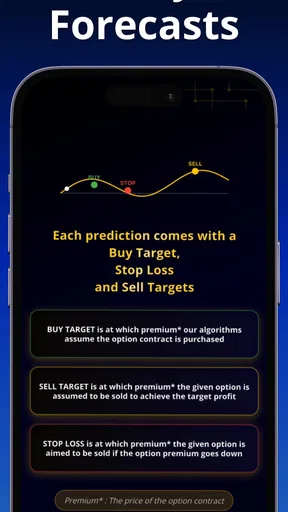
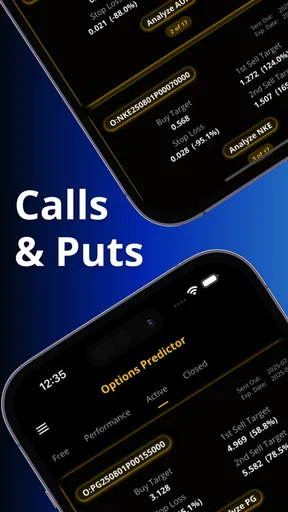
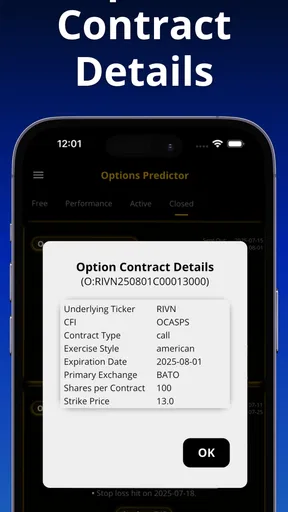
Stock Options Trading Signals is a tool designed to provide market ideas and alerts related to stock options. Signals may include details such as the underlying asset, strike price, expiration date, entry range, and possible exit targets. After reviewing the information, users can decide whether to research and place a trade through their own brokerage account. The app does not execute trades automatically unless a separately connected service supports that feature.
Are the trading signals accurate, and can I rely on them to make money?
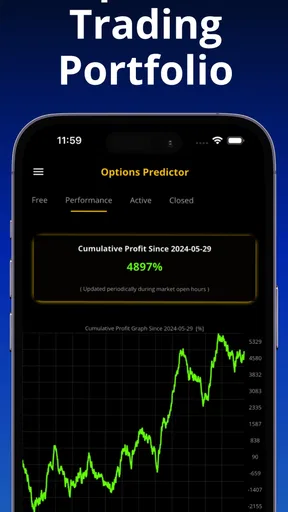
No trading signal can guarantee accurate predictions or consistent profits. Signals are generally based on technical analysis, market conditions, indicators, or the provider’s trading strategy, and they can become invalid quickly when prices or volatility change. During testing, the most useful approach was treating each alert as a starting point for independent research rather than a direct instruction. Past performance should never be considered proof of future results.
Do I need previous options trading experience to use the app?
Some basic knowledge is strongly recommended before using Stock Options Trading Signals. You should understand calls and puts, strike prices, expiration dates, implied volatility, time decay, bid-ask spreads, and the possibility of losing your entire premium. Beginners may find the alerts easy to read but difficult to evaluate correctly. Learning options fundamentals and practicing with a paper-trading account can help reduce avoidable mistakes.
Is Stock Options Trading Signals free, or does it require a subscription?
Availability and pricing can depend on the version of the app, region, and the provider’s current offer. Some features may be accessible for free, while advanced alerts, premium trade ideas, historical performance information, or real-time notifications may require a subscription or in-app purchase. Before downloading or starting a trial, check the store listing and subscription terms carefully, including renewal dates, cancellation rules, and whether fees are refundable.
What risks should I consider before following an options signal?
Options trading involves substantial risk, including rapid losses caused by price movement, time decay, volatility changes, low liquidity, and wide spreads. A signal may arrive late, become outdated, or fail to account for your personal risk tolerance and portfolio. You should verify every idea, use a defined risk limit, avoid investing money you cannot afford to lose, and remember that the app provides information rather than personalized financial advice.
